DeepSeek’s US Federal Ban: Scope, Dates and What to Check at Work

Updated: 3 days ago
The US DeepSeek order targets federal civilian agency procurement and information technology, including third-party products built using DeepSeek implementations. Its stated scope is not a nationwide prohibition on every American’s personal use. This US-focused explainer reflects sources checked at 04:04 UTC on October 21, 2026; later agency instructions may change implementation details.

Read the scope before changing a work process
Separate the legal instrument from a headline about the company. Identify the organization covered, the systems involved and the underlying model dependencies. An agency-IT or procurement restriction should not be restated as a nationwide ban on every individual’s personal use.


For a workplace tool, check who can approve it, what information may enter it and which implementation processes the data. Keep the notice’s requirements separate from an employer’s additional policy. Document dates matter when implementation guidance changes.
01. What actually changed this week?
The official Federal Register issue dated October 20 publishes a Department of Homeland Security notice on excluding and removing DeepSeek products from federal civilian executive branch IT systems and procurements. Reuters reported the restriction on October 19; AP reported China’s response on October 20. Those recent reports are the observable news signal for this article, not proof of a measured search-volume spike.

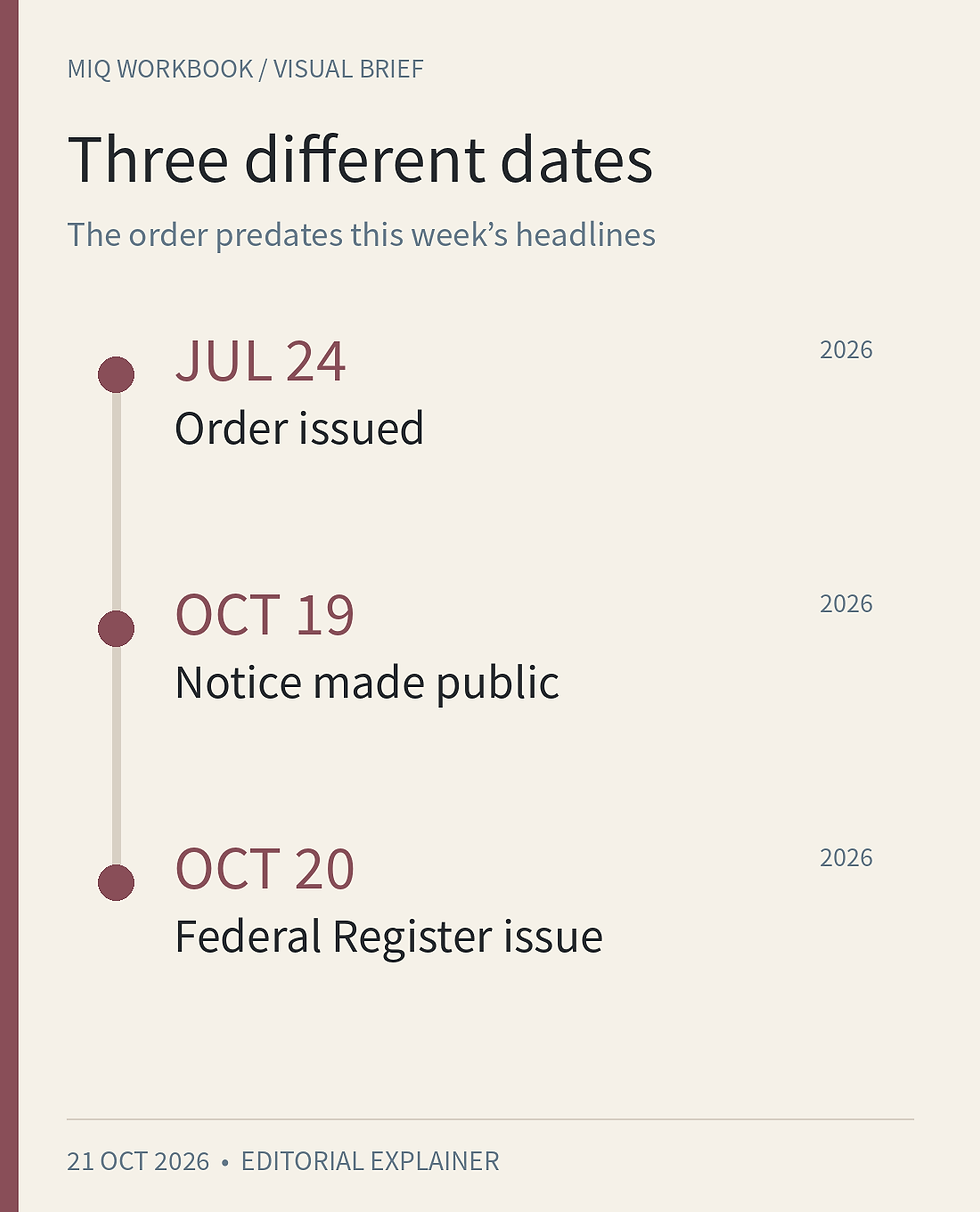
The order itself predates the headlines. ExecutiveGov identifies July 24 as its issuance date, while AP describes an order dating to late July and a notice made public on October 19. The Federal Register publication date is October 20. Reading those as a single new deadline would erase the difference between issuance, disclosure and publication.
02. Why the third-party clause matters
The notice addresses DeepSeek and affiliated products, but also third-party products and services developed using DeepSeek implementations. For an agency buyer, checking only whether the visible app name says DeepSeek is therefore an incomplete review. The model or component underneath the service can matter.


Consider a hypothetical document assistant sold under an unrelated vendor name. A useful procurement question is which model actually processes the documents and whether that dependency changes by feature or account configuration. This is an illustration of how to investigate the notice’s scope, not a claim that any named vendor is using DeepSeek or violating the order.
03. Separate the order, the security rationale and the response
The exclusion and removal requirement is documented in the notice. The security rationale is DHS’s assessment: AP reports concerns about China-based servers and potential access to sensitive US data. That is different from independently establishing that a particular user’s data has already been stolen.

China’s foreign ministry said on October 20 that it opposes extending national-security reasoning into technology and trade and would protect Chinese businesses’ lawful interests. That is the Chinese government’s position. It does not itself settle the security assessment, just as the US assessment should not be rewritten as proof of every hypothetical compromise.
04. A practical review for US workplaces
For federal civilian work, start with the agency’s current security and procurement instructions and identify the actual service, product version and model dependency. Keep the source notice with the review instead of relying on a screenshot of a headline. Implementation and any exceptions require the responsible agency process; this article does not decide an organization’s compliance.

For a private employer, establish its own approved-tools and data-handling rules rather than assuming a federal order automatically supplies the company’s entire policy. Before entering work material into any AI tool, check what information is permitted, where it goes and who can approve the use. These are MIQ’s general review questions, not additional requirements invented for this order.
Does this order prohibit my personal account?
The notice expressly concerns federal civilian procurement and agency IT. It should not be described as a blanket consumer ban on that basis. Other applicable rules and an employer’s instructions can still matter; distinguish personal activity from the system and data you use for work.
The takeaway: read the scope before reacting to the headline
The key questions are which organization is covered, which product and underlying implementation are involved, and which document date you are reading. We found no closely related existing MIQ issue article, so no unrelated internal recommendation has been added.


Comments